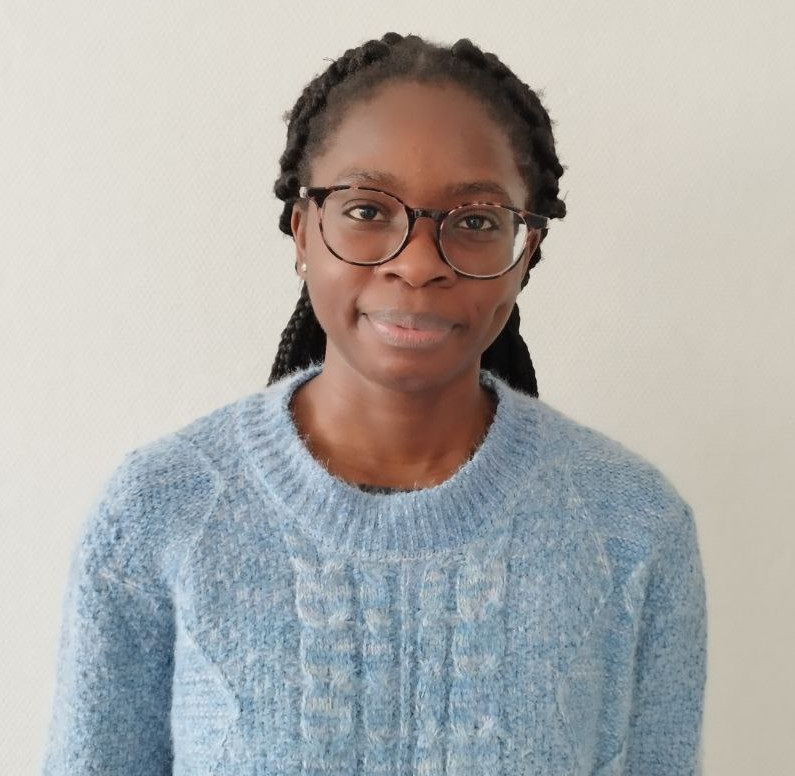
Gwladys Kelodjou
I recently completed my PhD in computer science at the University of Rennes, where I worked on Explainable Artificial Intelligence within the LACODAM Inria team at the IRISA Laboratory, France, under the supervision of Alexandre Termier, Laurence Rozé, and Véronique Masson. My work aims to improve the quality of model decision explanations, making them more reliable, interpretable, and useful.
I am currently seeking postdoctoral opportunities.
Education
Ph.D. in Computer Science
Dec 2022 - Jan 2026
University of Rennes, France
Machine learning models achieve increasingly strong predictive performance, yet their decision processes often remain opaque and difficult to understand. This lack of transparency limits their deployment in sensitive and high-stakes settings, where predictions must be explained to be trusted and used. Explainability encompasses approaches that aim to make model behavior more understandable to users. In particular, local feature attribution methods quantify the contribution of each input variable to a model’s output by assigning importance values, which constitute the explanation for a given prediction. Approaches based on the Shapley value are widely adopted within this family due to their strong theoretical guarantees. In practice, however, exact Shapley values are generally not tractable and must be estimated. Most existing approaches rely on stochastic sampling procedures, which introduce variability into the resulting explanations and thus compromise stability, leading identical inputs to receive different feature importance values and undermining the reliability of the results. To address this issue, my thesis introduces ST-SHAP, a feature attribution method designed to improve stability by limiting the effect of randomness in the estimation process, and StratoSHAP, which defines a family of deterministic feature attribution methods that remove randomness and yield fully stable results. Together, these contributions lead to more stable feature attributions and enable more consistent analysis of machine learning model outputs.
Master's degree in Computer Science
2019 - 2022
University of Yaoundé 1, Cameroon
At the University of Yaoundé 1, research master's programs in computer science are structured into different specializations. In 2019, when I started my master's, the available options were "Data Science'', "Software Engineering'', "Networks and Systems'', and "Cybersecurity''. I chose Data Science because I was inspired by the vast opportunities Artificial Intelligence offers and its potential to drive innovation.
Bachelor's degree in Computer Science
2016 - 2019
University of Yaoundé 1, Cameroon
At the University of Yaoundé 1, computer science bachelor's programs are structured into different specializations. In 2019, when I was pursuing my degree, the available options included "Software Engineering'', "Networks and Systems'', and "Cybersecurity''. I chose to specialize in Software Engineering.
Teaching
L2 Computer Science - Formal Tools for Computer Science
2023 - 2025
ISTIC - Univ Rennes
42 hours (21 hours each year) of tutorials
Some of the concepts discussed: Logic, sets and relations, functions, induction, grammars, automata, etc.
L1 Computer Science - Algorithms and Complexity
2023 - 2024
ISTIC - Univ Rennes
18 hours of practical sessions
Some of the concepts discussed: Recursion, complexity analysis, programming paradigms (divide and conquer), etc.
Language: Java
Techwomen Factory Training Program
2022
Caysti - Yaoundé
40 hours including lectures, tutorials, and practical sessions
Courses taught:
- Evaluation of data mining models (20h)
- Relational database modeling (20h)
L2 Computer Science - Algorithms and Data Structures
2020 - 2021
CS Department - Univ Yaoundé 1
20 hours of tutorials
Some of the concepts discussed: Arrays, recursion, complexity analysis, strings, pointers, stacks and queues, trees, graphs, greedy algorithms, etc.
Talks
Oral and Poster at CAp 2024 - French Conference on Machine Learning
Title: Affiner SHAP : Améliorer la stabilité grâce à la sélection de voisins en couches.
July 2024
Lille, France
Poster at AAAI 2024
Title: Shaping Up SHAP: Enhancing Stability through Layer-wise Neighbor Selection
February 2024
Vancouver, Canada
Dissemination
Services
- Reviewer for ESANN'24, AIMLAI'25
- Sub-reviewer for XAI'25
- Scientific Committee Assistant for CRI'21 - Cameroon National Conference on Computer Science
- Member of the scientific outreach team of the DKM department - IRISA Laboratory
Outreach
-
L codent, L créent
- Facilitation of interactive workshops (8 x 45 min) on creative programming in Python for middle school girls (8th grade). Edition 2023-2024.
- 9th-grade internship - Facilitation of creative programming workshops in Python for middle school girls.
-
Member of the organizing team for IWD 2023 with the Women Techmakers Yaoundé community (Google)
-
Lead Organizer for IWD 2022 with the the Women Techmakers Yaoundé community (Google)
-
Member of the organizing team for IWD 2021 with the Women Techmakers Yaoundé community (Google)
-
Web development learning mentor with the SEED community.
Contact
gwladys.kelodjou@gmail.com